Buying a flat is one of the biggest financial decisions most people make. And when you are looking at property in Bhubaneswar, Cuttack, Puri or another part of Odisha, it is easy to get caught up in the brochure, sample flat, location and launch offers.
But before paying a booking amount, there are a few things worth checking carefully. RERA registration is one of the first places to start.
Why RERA Odisha matters when buying a property
RERA registration gives buyers an important source of project information. Instead of depending only on what a salesperson says, buyers can compare the project's regulatory information with the claims made in brochures, advertisements and booking documents.
For a buyer, this is particularly useful when checking the project's proposed timeline, area details, promoter information and other important disclosures.
RERA should not be treated as the only property check. Think of it as one important part of your overall due diligence before booking.
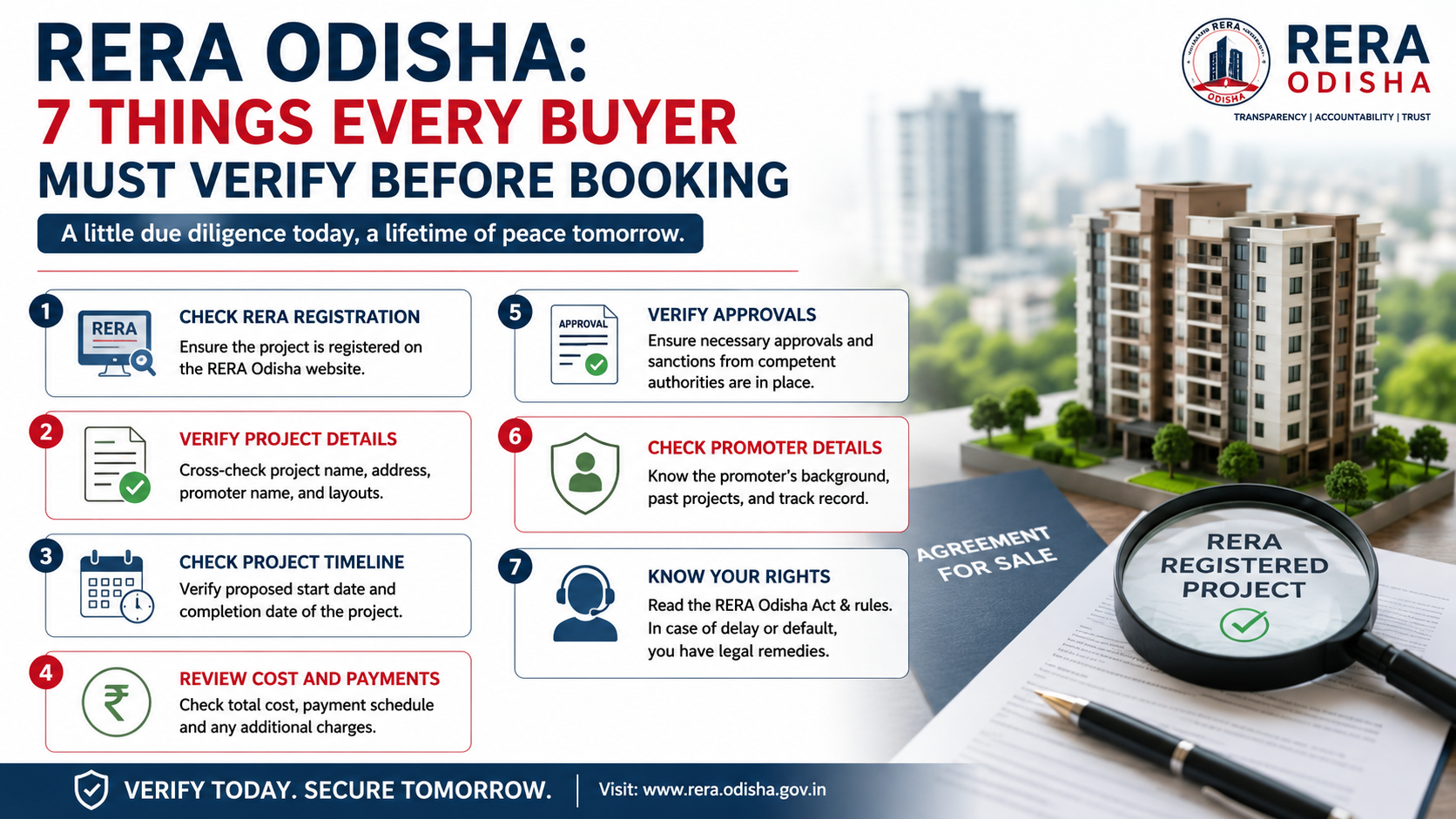
7 things to check before booking a flat in Odisha
1. Check the project's RERA registration
Start by checking whether the project is registered with the applicable real estate regulatory authority.
Note the registration number and compare the details with the information provided by the developer. The project name, promoter details and other basic information should make sense when compared with the documents you receive.
If something does not match, ask the developer to explain it before making a payment.
2. Compare the possession date
Possession dates are often one of the biggest factors in a home-buying decision.
Do not look only at the date mentioned in a sales brochure. Compare the promised timeline with the project's regulatory filings and the agreement you are being asked to sign.
If different documents show different dates, get the difference clarified in writing.
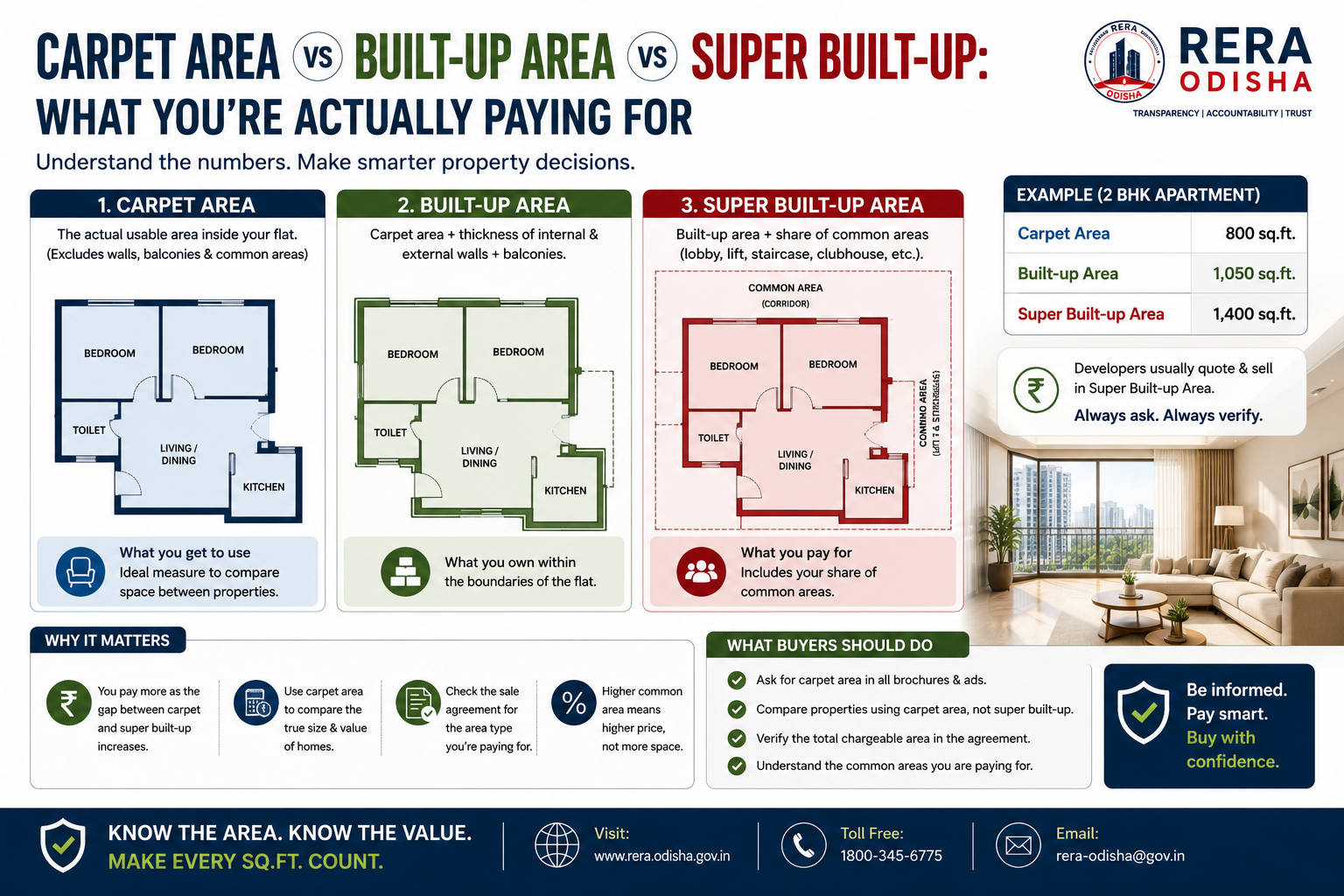
3. Understand the carpet area
A property brochure can show several different area figures. This can make it difficult to compare two flats fairly.
Pay particular attention to the carpet area and understand exactly what you are getting for the price you are paying.
A larger-looking number in a brochure does not automatically mean you are getting more usable living space.
4. Ask about land title and encumbrances
RERA registration does not replace proper legal due diligence.
Before booking, buyers should ask about the property's title documents, ownership and any relevant encumbrances or disputes.
For a significant purchase, it is sensible to have the relevant documents reviewed by a qualified property lawyer rather than relying only on a verbal assurance.
5. Look at the builder's previous projects
The current project is not the only thing worth researching.
Look at the developer's previous projects. Check how those projects progressed, whether possession happened broadly as promised and what existing residents say about construction quality, maintenance and after-sales support.
A builder's past record can give you useful context before you commit to a new project.
6. Understand how your money is being used
Buyers should understand the payment schedule and the purpose of the payments they are making.
Ask for the relevant project and account details and make sure the payment instructions you receive are consistent with the official documentation.
If you are unsure about any payment request, stop and verify it before transferring money.
7. Check whether the promised amenities are actually part of the plan
Swimming pools, clubhouses, landscaped gardens, gyms and other amenities can make a project look attractive.
But buyers should understand whether an amenity is actually part of the sanctioned project plan or is simply being presented as a future proposal.
Ask the developer to clearly identify the amenities included with the property and check the relevant project documents.
What documents should a property buyer ask for?
The exact documents can vary depending on the project and transaction, but a buyer should generally ask for the documents relevant to the project, property and agreement before committing a substantial amount.
- Project RERA registration details
- Project and promoter information
- Agreement and payment schedule
- Carpet-area details
- Relevant title and ownership documents
- Encumbrance-related information where applicable
- Sanctioned plans and approved project information
- Details of promised amenities
What if the information does not match?
Do not feel pressured to book immediately just because a project has a limited-period offer or a salesperson says that units are selling quickly.
If the RERA information, brochure, payment schedule or agreement contains conflicting information, ask questions and get the answers documented.
A few extra minutes of checking can save you from a much bigger problem later.
Buying a flat in Bhubaneswar? Start with verification.
Bhubaneswar has a wide range of residential projects across areas such as Chandrasekharpur, Patia, Nayapalli, Jaydev Vihar, Khandagiri and other growing neighbourhoods.
With so many options available, the challenge is not simply finding a property. It is finding a property that fits your budget, location, lifestyle and long-term plans while also giving you confidence in the project and documentation.
At ProplaX Realty, our approach is to help buyers start with a verified shortlist rather than making them go through every available listing on their own.
Frequently asked questions
Why should I check RERA registration before buying a flat in Odisha?
RERA registration provides buyers with an important source of project information. It allows you to compare regulatory information with the claims made by the developer.
What should I check in a RERA registered property?
Check the registration details, possession timeline, carpet area, relevant title and encumbrance information, builder's track record, payment-related disclosures and whether promised amenities are included in the sanctioned project plan.
Should I rely only on a builder's brochure?
No. A brochure is useful for understanding a project, but important claims should be compared with regulatory filings, agreements and relevant property documents.
Why is carpet area important?
Carpet area helps you understand the usable area of the home. Comparing properties only by super built-up area can make it harder to understand what you are actually getting for your money.
Final checklist before you book
- RERA registration checked
- Project and promoter details matched
- Possession timeline checked
- Carpet area understood
- Relevant title documents reviewed
- Payment schedule understood
- Builder's previous projects researched
- Amenities verified
- Agreement reviewed before signing
If something feels unclear, do not rush. Ask questions, verify the documents and take professional legal advice where necessary.